Whose Cultural Heritage? The Power Station on the Zanders Site in Bergisch Gladbach as a Reflection of Architecture, Industrial History and Migration
The talk analyses which cultural memories have been inscribed in Bergisch Gladbach’s industrial architectural heritage to date, and whether and to what extent they are affected by new debates on class and race. This will be discussed using the example of the inner-city industrial site of the Zanders paper factory, which fell into disuse in 2021. With its acquisition by the city, the complex, with its extensive building stock, in particular a number of listed monuments, was recognised as “cultural heritage” in terms of remembrance policy. The example of the company’s own power station shows that it is primarily the authorship and architecture of the famous church architect Dominikus Böhm that is commemorated, rather than the broader social history of the building complex. Although accounts from workers show that the building also served as a social and religious retreat for migrant employees and was popularly known as the “mosque”, these references have hardly entered the collective memory to date. This raises the questions of whose cultural heritage the power station actually is and how the dynamics of inclusion and exclusion in its subaltern and post-migrant history of remembrance can be understood. What strategies are available for a future supra-regional culture of remembrance for the Zanders site?
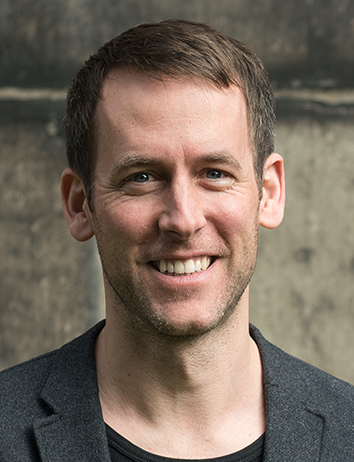
Daniel Lohmann (he/his) studied architecture, and is specialised in documentation, research and conservation. He trained as a research fellow at the German Archaeological Institute and holds a PhD in architectural history from Cottbus University. From 2009 to 2017 he was an assistant professor at the chair of building conservation at RWTH Aachen, becoming professor for the history of architecture at TH Köln in 2017. His research interest is object-based, covering a range from Roman antiquity to classical and post-war modernism. Recently, he has focused on housing heritage in the times of climate crisis, and methods of value-based recording and analysis.
Kontakt