Doing Research With, Not On: Ethics of Knowledge Co-Production
Research is never neutral, particularly in times of crisis. This keynote examines the ethical, scientific, and practical dimensions of co-producing knowledge within transdisciplinary contexts. It begins from the conviction that research should be a space of parity, one that seeks to equalise relations of knowledge production and recognises all contributors as experts of their own experiences. Contemporary crises, such as climate change and the Covid-19 pandemic that began in China before spreading globally, demonstrate that the impacts of crisis are often indiscriminate. Responding effectively to such challenges therefore requires research approaches grounded in collaboration, mutual respect, and shared responsibility. Why does parity in research matter, and what is its scientific relevance? These questions form the foundation of my argument. Drawing on Homi Bhabha’s notion of Third Space and on a collaborative research project with African migrants as co-researchers in the United Arab Emirates and China during the Covid-19 pandemic, I argue that co-producing knowledge is not an end point but an ongoing, inclusive practice. It requires balancing care with critique, openness with structure, and flexibility with accountability, while working through institutional and cultural hierarchies so that diverse forms of expertise can meaningfully shape research.
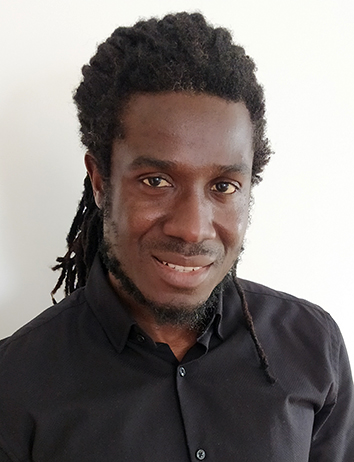
Jonathan Ngeh (he/his) is a sociologist affiliated with the University of Cologne. His research examines social inequalities, focusing on labor exploitation, migrant exclusion, and epistemic inequality, as well as practices of co-producing knowledge. His regional focus includes the Arab Gulf states, Northern Europe, and West Africa. He is finalising a monograph with Michaela Pelican and Tu Huynh titled Parity in Research: The Third Space of Knowledge Production (Routledge, 2027), analysing the challenges and potentials of co-producing knowledge.
Kontakt