Moving Memories: Embodied Acts of Collective Remembering through Dance and Theater
In an open conversation we ask how participatory practices of remembering in dance and theatre can challenge dominant constructions of collective memory manifested in monuments, anthems, institutionalised archives and staged choreographies. Such state-aligned narratives rely on notions of unity and nationalism that systematically marginalise the memories of ethnicised, racialised and gendered subjects to consolidate their own legitimacy. In contrast, embodied memory practices in a variety of folk dances in Turkey, Kurdish Govend dance, Senegalese forum theatre, and Vietnamese hip hop constitute ephemeral yet powerful formations emerging from marginalised communities across different historical and geopolitical contexts. These practices have the potential to create publics in which collective remembering is performed, negotiated, and transformed, while opening new forms of inclusive self-representation, collective healing, and resistance. Drawing on case studies from research conducted between Cologne and Turkey, Kurdistan, Vietnam, and Senegal, we ask how embodied acts of remembering unsettle hegemonic narratives and operate as embodied and dynamic archives of resistance.
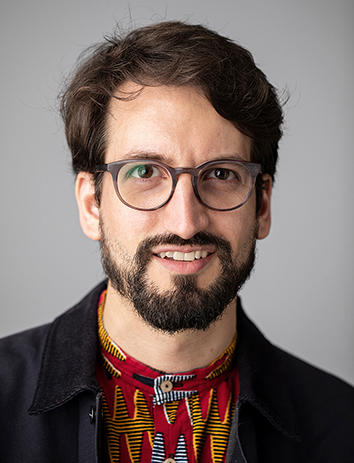
Simon Meienberg (he/his) is a design ethnographer with an interest in postcolonial urban planning, social participation and transformation. In his doctoral thesis “Dakar Mobilities” at the research training group “connecting – excluding” of the University of Cologne researched urban practices of exclusion and participation in Dakar by employing multimodal and co-creative methods. Currently, he is a member at the early-career-research cluster “Participatory Memory” at TH Köln.
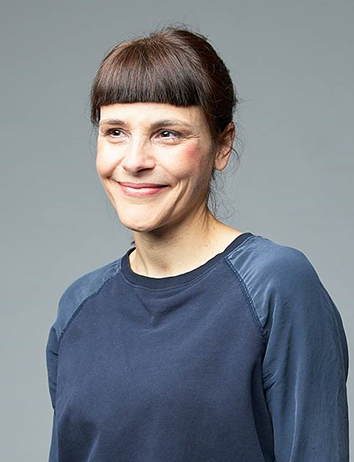
Sandra Kurfürst (she/her) is Professor of “Cross-cultural and Urban Communication” at the Department of Social and Cultural Anthropology, University of Cologne. She acquired her PhD in Southeast Asian Studies from the University of Passau in 2011. She is speaker of the DFG-funded research training group “Connecting-Excluding: Cultural Dynamics Beyond Globalised Networks”. Her research interests include public space, performativity, youth, and gender in Southeast Asia, as well as visualisation in participatory programmes.
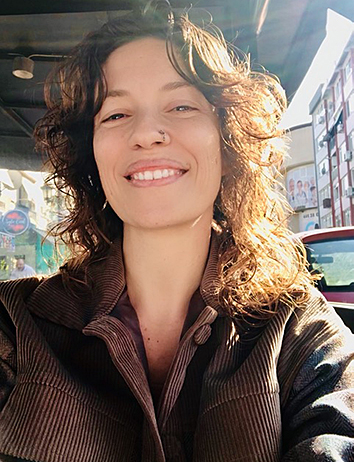
Sevi Bayraktar (she/her) is Professor of Dance, Music and Performance in Global Contexts at the University of Music and Dance Cologne. She holds a PhD in Culture and Performance from University of California Los Angeles (UCLA). Her research analyses folk dance as a participatory choreography and a site of cultural memory. She is the author of Dissenting Through Dance: Folk Dance, Gender, and Political Protest in Turkey and co-editor of Tanzen/Teilen – Sharing/Dancing. Her work examines how dance operates as a medium of social critique, collective memory, and political imagination.
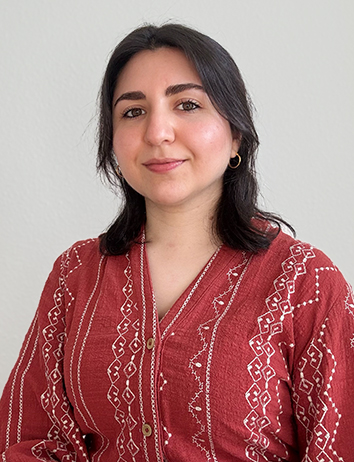
Wan Issa (she/her) is a Kurdish cultural researcher, artist, and translator. She graduated from Europa-Universität Flensburg and holds a B. A. degree in European Cultures and Society. During her studies at EUF, she conducted several artistic projects, including Hybrid Cultural Identity, for which she was nominated for the DAAD prize. She completed her Master’s thesis in 2025 in Social and Cultural Anthropology at the University of Cologne, focusing on Govend (Kurdish collective dance) among youth in Cologne and examining how this practice contributes to the processes of embodied memory-making within the Kurdish diaspora community.
Kontakt