The Past as a Participatory Medium: Rethinking Memory Culture in the Post-Digital Age
In post-digital societies, collective memory is produced through participation rather than simply being preserved in institutional archives. Our public sphere is shaped by platforms, networked images, OSA-data and various forms of interactive media. This causes remembrance to shift away from ritualised practices criticised as Versöhnungstheater today to become a social practice again, performed, contested and co-created. Positioned at the intersection of media art, design, technology, and public history, eCommemoration is a platform and initiator of participatory formats of an international, often multidirectional memory culture, including immersive storytelling strategies, performative and experimental media art, games, XR installations, and collaborative digital environments. Through its initiatives, the programme highlights aesthetic practice as a means of generating knowledge: not depicting the past but demonstrating that historical meaning in collective memory-making is created and shared through contemporary collaborative actions. This talk uses artistic case studies to demonstrate how new technologies pave the way for new forms of participation and to illustrate how new publics and a transdisciplinary approach can reshape our memory culture through collaborative artmaking.
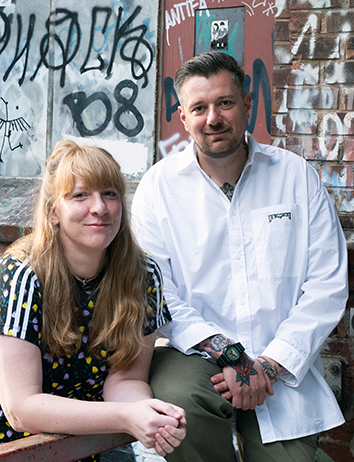
Felix Fuhg (he/his) is a curator, museologist, and historian whose research focuses on the history of popular cultures. He is exploring ways in which the past can be experienced through media. His work centres on historical issues and forms of remembrance in contemporary art and media cultures. He curates the eCommemoration programme at the Körber Foundation. The programme explores how memory cultures have changed in the digital age, with a particular focus on interventionist art and investigative aesthetics.
Foto: Dr. Felix Fuhg & Dr. Anna Norpoth, Foto: Moses Omeogo
Kontakt